

Snow days in the Ozarks are rare moments that seem to slow our local communities into a calm stillness. Some schools and businesses close on these days. Similarly, at Turpentine Creek Wildlife Refuge, we may have to close to the public due to safety reasons. However, inside the gates, activity abounds.
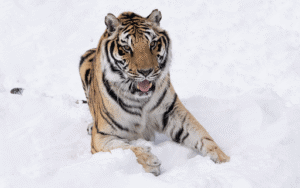
Animal Care Weathers the Weather
In the winter months, Animal Care staff members and interns take on different tasks to mediate the changing weather. In below freezing temperatures, ensuring the animals have fresh water is a near constant battle. The keepers must break the ice out of the water dishes several times a day, and refill them with drinkable water. Getting around the refuge is more difficult considering freezing padlocks and slippery terrain, but the animals require high quality care regardless of inclement weather. In every den space, mulch has to be continually added and cleaned to provide the animals with the proper insulation. For some animals, who are native to areas with warmer climates, even this is not enough. These animals require heated dens and nighthouses to ensure their safety. Checking the efficiency of these heaters is another important task that must be done in the winter.

Cold Snap? Take a Nap!
Many animal residents at TCWR are heat-lovers. Despite being born and raised in captivity, the animals native to Africa and South America are adapted to endure the heat. These animals include the servals, lions, leopards, jaguars and of course, Rambo the Spotted Hyena. In some cases, freezing temperatures can stress these animals. To avoid this, keepers will lock certain individuals into their shelters to ensure that they stay warm. Other heat-loving animals may come outside to briefly investigate the snow, but they still use their heated dens and nighthouses the most on snow days. Unbothered and cozy, the warm-weather animals take snow days as an opportunity to be languid and take long naps.

The bears observe this same behavior. Our bears do not need heaters, as they are animals accustomed to the cold. However, in the colder months, they take to their dens by force of nature. Bears are not true hibernators, but they go through a similar process called torpor – a pseudo hibernation. By the time snow comes to the Ozark Plateaus, the bears have already been napping for months, and they see no reason to change their plans.
Is There Snow? Let’s Go!
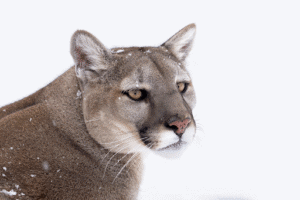
Many animals that call the refuge home are cold connoisseurs! The animals native to Arkansas spend months growing in thick winter coats. Mountain lions and bobcats even grow more fur in the space between their toe pads to help keep their feet insulated. On snow days, these cats find shelter under their platforms and rock hides, but oftentimes they are still out in their habitats enjoying the seasonal weather.
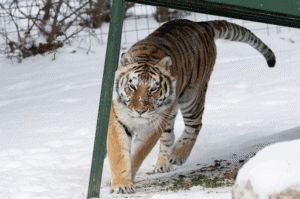
Many guests are surprised by the tigers’ affinity to snow. However, being native to many Southeastern Asian countries, (including Russia!) the tigers absolutely love a snowy day. Our staff members and interns at TCWR always find that when it snows, the tigers are out, active, and oh so playful. When the snow makes operational tasks more difficult for the humans at the refuge, getting to see a tiger with a case of the zoomies makes the hard work worth it.
Sources
https://www.lionstigersandbears.org/winter-survival-in-the-wild-how-big-cats-bears-adapt/
https://www.gtnpf.org/field-notes-with-steve-cain-essential-winter-adaptations/
https://www.nationalforests.org/blog/do-bears-really-hibernate
*Published by Mack Polk on 01/31/2026*