
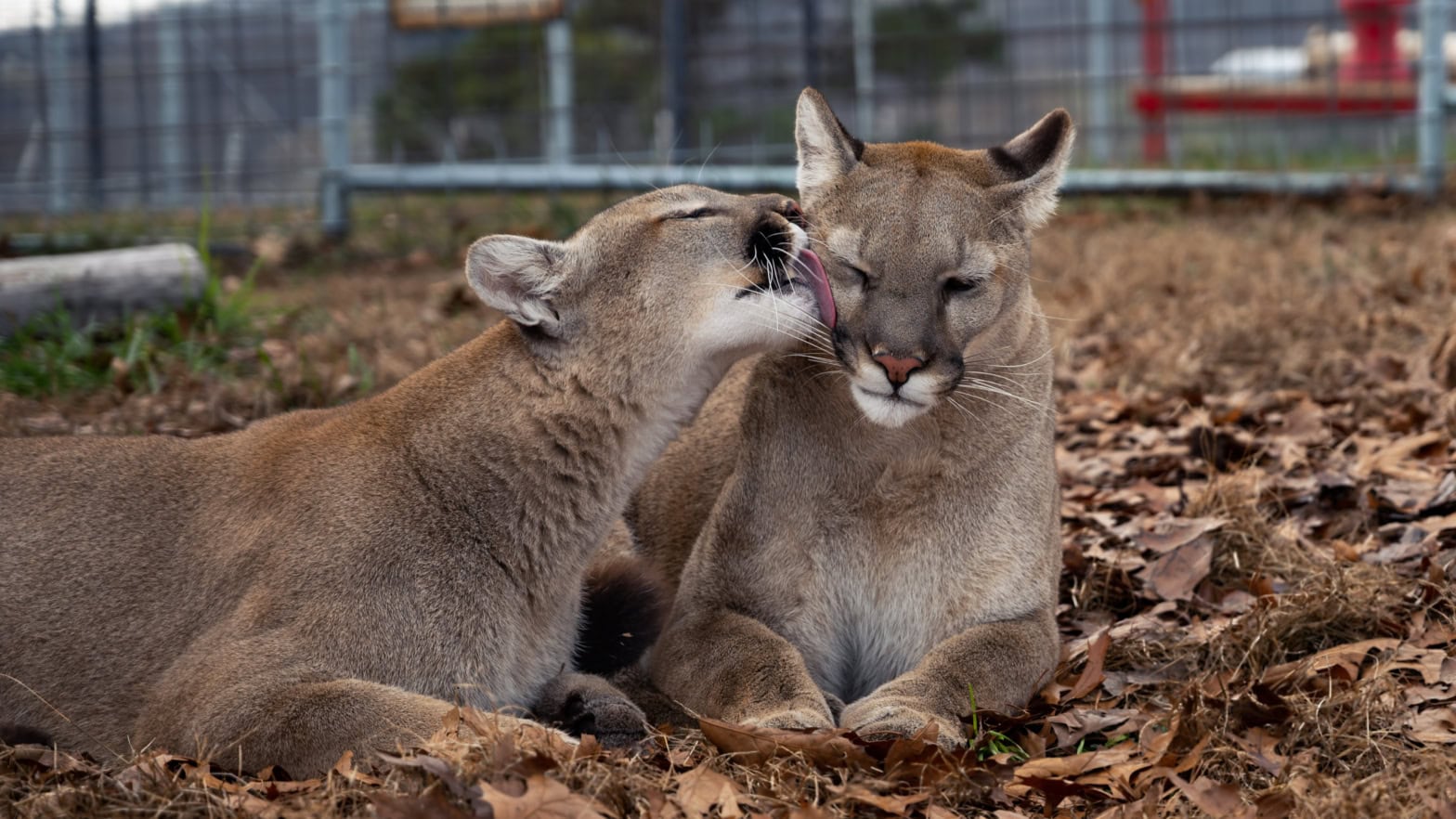
Today is Valentine’s Day, and love is not just something for people to enjoy. It’s a feeling experienced all throughout the animal kingdom, even if that may look different than what humans are used to. Animals feel a wide range of emotions, just like we do, and love is one of those complicated, multi-faceted ones.
So how do we know animals feel love?
Love is incredibly complex, even for humans, so understanding it in animals is a lot more complicated. Regardless, animals are shown to be more than capable of experiencing emotions and forming meaningful and deep connections, within their species, and outside of their species. An example of this would be seen in grieving animals. Elephants will actually mourn their family and friends when they pass with in depth grieving rituals. Many of us see the connections animals can form every single day when we arrive home to our pets. Dogs and cats both show immense love and care for their humans. Dogs have been actually been observed showing a direct empathetic response to human sadness.
Chemical response
Humans and animals share some physiological responses that indicate they feel love in a similar way to us. Our brains release the chemicals oxytocin and dopamine when feeling loving emotions, and animals are no different. Those same chemicals are seen in their brains too. For example, when a human is petting their dog, oxytocin is being released in both of their brains.
How do Turpentine animals show affection?
While cats aren’t always known to be the most loving animals, our wild cats here at Turpentine Creek certainly have their ways of expressing affection. The animals here that live together exhibit certain behaviors to indicate their bond. Allogrooming, or social grooming, is something seen in cats, both big and small, that have a close relationship to one another. They help keep each other clean and deposit their scent on each other to improve their bonds.
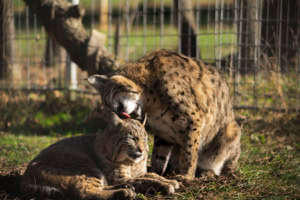
This is also seen when they are head-bunting each other. You’ve probably noticed a housecat headbutting or bumping their head into objects or their humans. This action deposits scent through pheromones and improves social bonds. So our big cats that live together do this to each other, too.
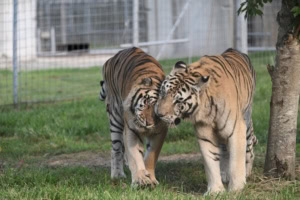
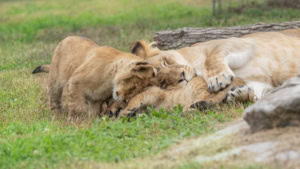
Another way they show affection to each other is by cuddling together.
Chuffing is also a way to maintain and establish social bonds between tigers. They make this soft breathy sound to express their friendliness to each other. They do it when they approach each other or rub against each other.
We may not fully understand exactly how intricately animals feel love, but it’s indisputable that their emotions are deep and complex and they feel affection for those around them.
Sources
https://online.uwa.edu/news/empathy-in-animals/
https://sandiegozoowildlifealliance.org/story-hub/2025/02/03/wild-love-languages
https://fcmod.org/blog/2021/02/08/animal-love-languages/
https://www.lionstigersandbears.org/behind-the-roar-understanding-the-behavior-of-tigers/
*Published by Sara Edwards on 02/14/2026*