Sharks and dolphins. Owls and dragonflies. Humans and squids. These animals are all very different from each other, yet they all have one thing in common: They have similar traits, developed through a process known as convergent evolution.
Sharks are fish, while dolphins are mammals. Humans and owls are both vertebrates, while dragonflies are invertebrates. And yet sharks and dolphins look very similar in shape and color, owls and dragonflies both have wings that allow them to fly, and humans and squids have complex, camera-like eyes. These traits didn’t come from the same place. Instead, they developed separately. Convergent evolution happens when two very different species that aren’t closely related evolve to have similar traits.
Sincerest Form of Flattery
Convergent evolution can occur in many ways. Two of the most common ways are through mimicry and similarity of habitat.
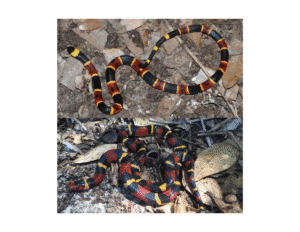
There is a well-known saying for telling the highly venomous coral snake apart from similar, nonvenomous ones. “Red on black, friend of Jack. Red on yellow, kill a fellow.” This saying isn’t always entirely accurate, but it shows how similar a mimic can be to a dangerous animal. The coral snake, scarlet kingsnake, scarlet snake and milk snake all share a similar color pattern of red, black and yellow bands, but only the coral snake is venomous.
Different Equations, Same Answer
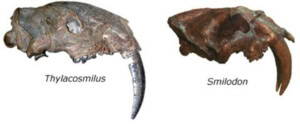
Convergent Evolution can also occur when two different animals live in separate, but similar habitats. Although they are unrelated and have little to no contact with each other, the environments and their roles in it can give them similar traits. One such example is that of the long, serrated canines shared by the marsupial Thylacosmilus and the saber-toothed cat, Smilodon.
A more modern example is that of the vultures. There are actually two types of vultures. “Old World” vultures can be found in Africa, Europe and Asia, and are most closely related to hawks and eagles. These include the bearded vulture, Egyptian vulture, and griffon vulture. “New World” vultures are found in the Americas and include turkey vultures and the Californian condor. Although they look similar to Old World vultures and play a very similar role, they are actually more closely related to storks and cranes.
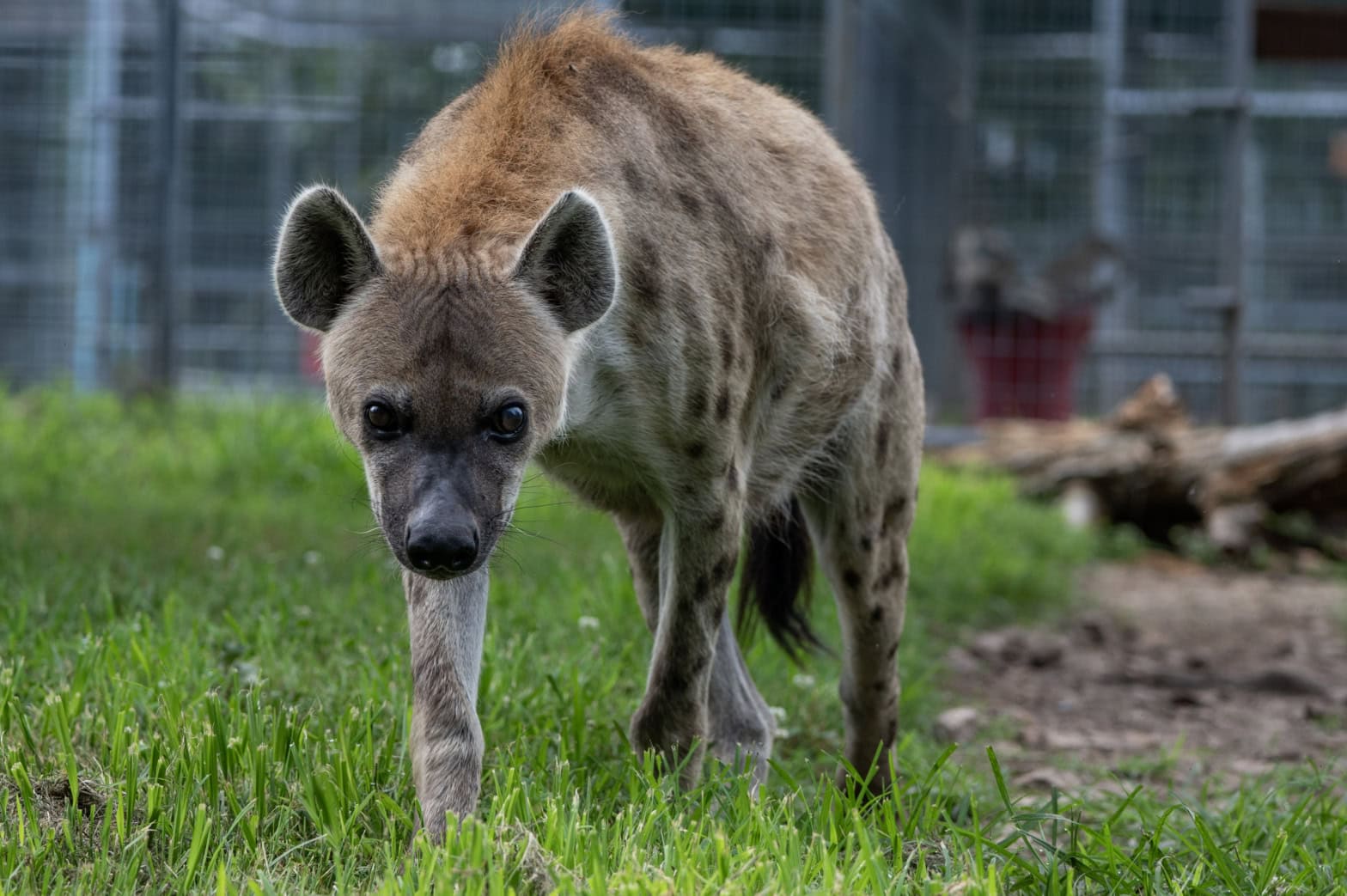
Evolution is a complicated thing, and doesn’t just determine physical traits or ecological roles. It can also lead to an animal’s social structure. Although there are several different species that live in social groups, these groups don’t always look and act the same. Yet the spotted hyena has a similar social structure to that of humans, both in size and complexity. Both species live in large, complex social groups in which the members may or may not be related to each other.
Sources
Figure 1: https://www.oriannesociety.org/science-of-scales/coral-snakes-and-their-mimics/?v=f69b47f43ce4
Figure 2: https://evolution.berkeley.edu/similarities-and-differences-understanding-homology-and-analogy-ms/convergent-evolution/
http://www.zo.utexas.edu/courses/thoc/convergence.html
https://pmc.ncbi.nlm.nih.gov/articles/PMC2346515/
https://www.npr.org/sections/13.7/2013/02/21/172388283/convergent-evolution-hyenas-offer-clues-to-the-human-past
*Published by Eryn Meeker on 03/21/2026*