
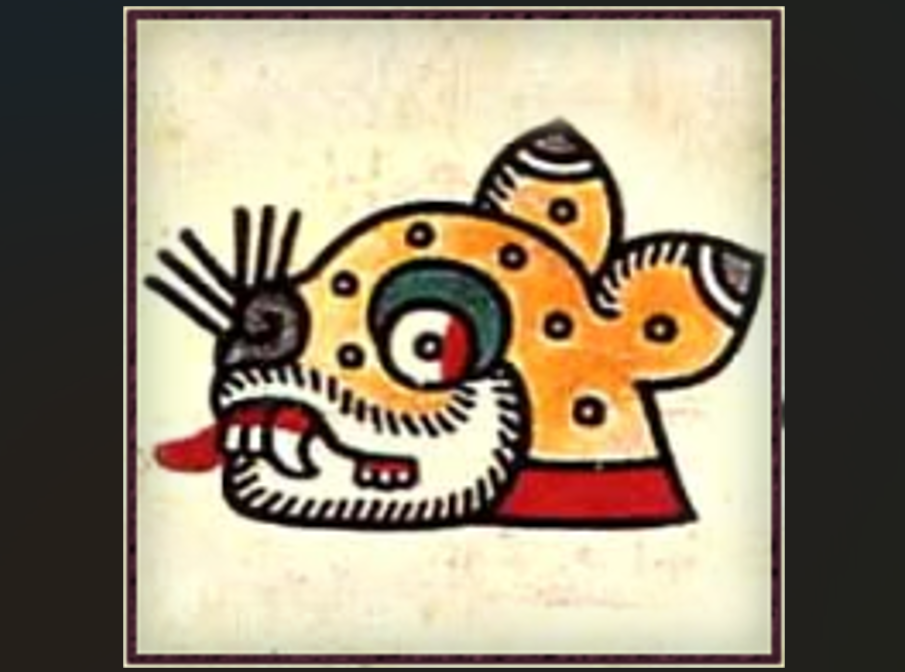
Jaguars are majestic cats surrounded by mystery. Did you know they also play a part in ancient mythology? Jaguars have intrigued people for centuries. Ancient peoples in Mesoamerican civilizations revered jaguars. In these societies, observers contextualized the jaguar’s characteristics and behaviors through the lens of their own cultures, religions, and myths.
Culture and Time
Before diving into the jaguar’s cultural significance, it is important to define the represented cultures, their position in the world, and how they interact with one another. Mesoamerica refers to the historic cultural hub spanning from the southern region of modern-day Mexico to northern Nicaragua. From the Pre-Classic Period to the Post-Classic Period (1800 B.C.E. – 1519 C.E.), there is a plethora of written recordings, art pieces, and architectural sites that describe and define many ancient cultures.
Some of the most notable civilizations of this region were the Olmec, Maya, Teotihuacan, Mixtec, and Aztec cultures. These cultures were distinct from one another and rose to dominance at different times. However, they overlapped spatially across Mesoamerica. Because of this overlap, the societies shared similar lifestyles and ideological beliefs. For example, different cultures worshipped gods with different names, yet these deities were often depicted similarly and held dominion over the same aspects of nature.
Humans and Jaguars
Jaguars are the apex predator of Mesoamerica. Therefore, Mesoamerican cultures saw jaguars and humans as predatory equals. The Mayans believed that their people had a spiritual connection to jaguars and that some humans could even turn into jaguars. The Aztec elite warriors were called “the Ocelopilli,” meaning the jaguar noblemen. These soldiers wore jaguar pelts and helmets to channel the animal’s power.
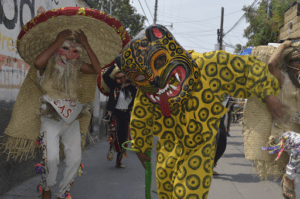
To this day, Mexicans gather during festivals to celebrate their indigenous roots and perform the Danza de los Tecuanes, or “the dance of the Jaguar.” The dance depicts humans hunting a jaguar. Because jaguars also symbolize rain in many Mesoamerican cultures, indigenous peoples perform this dance to bring rain and bountiful harvests. However, jaguars’ connection to nature, and ancient spirituality runs even deeper.
The Jaguar Deity
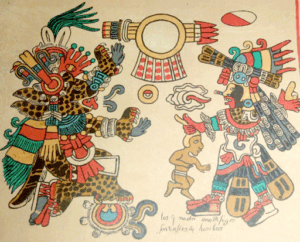
Tezcatlipoca is an ancient Aztec deity that played a crucial role in the Aztec creation story. He was a powerful but vengeful god, often deceiving other spirits and taking sacrifices. He takes the form of many animals throughout Aztec stories, but the most notable animal spirit is the jaguar – the most feared animal in Mesoamerica. The Aztecs believed that the deity would take the form of a jaguar, and under this guise, he was called Tepeyollotl or “Heart of the Mountain.” When Tepeyollotl stretched, the ground would shake. Furthermore, the Aztecs interpreted the commonly known constellation ‘Ursa Major’ as a jaguar representing Tezcatlipoca. By these associations, the jaguar represented earthquakes, the night sky, the underworld, and warfare.
Travelers of Light and Darkness
The jaguar’s natural ability to move through water, over vast distances of land, and climb into trees led to the belief that jaguars could move through different spiritual dimensions. Jaguars rest and dwell in shallow caves and other den spaces. This confirmed the Mesoamerican belief that jaguars could travel to and from the underworld.
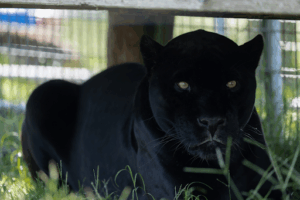
About 90% of jaguars are yellow with black rosettes whereas the other 10% are melanistic, or black with rosettes. This duality gave way to the ancient belief that jaguars were associated with other dualities such as light and dark, or good and evil.
Sources
https://www.mexicolore.co.uk/aztecs/flora-and-fauna/jaguar
https://www.youtube.com/watch?v=uW0Lg_bI63U
https://www.worldhistory.org/timeline/Mesoamerica/
https://www.thoughtco.com/tezcatlipoca-aztec-god-of-night-172964
https://www.mexicolore.co.uk/aztecs/gods/god-of-the-month-tezcatlipoca
https://www.jstor.org/stable/23816254
*Published by Mack Polk on 01/03/2026*