
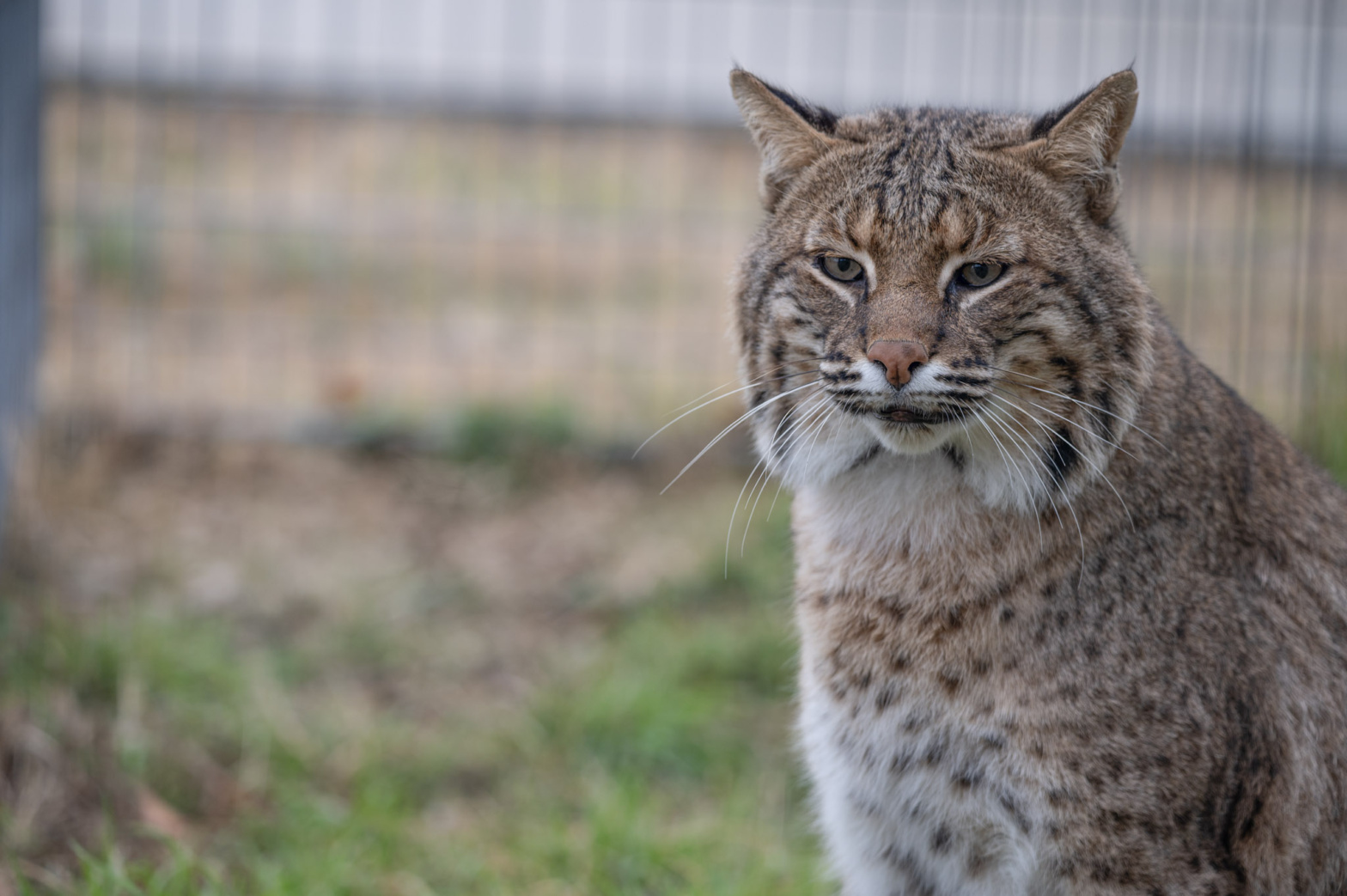
Turpentine Creek Wildlife Refuge has been a home to previously abused, neglected, and abandoned cats for quite some time. Some of these cats are apex predators, such as the lions and tigers. Others are mesopredators. Mesopredators are animals that are mid-ranking in the food web and prey on other animals while also being preyed upon or regulated. The mesopredator species at Turpentine Creek Wildlife Refuge include bobcats, African servals, caracals, and a fishing Cat. This variety is just a small fraction of the feline mesopredators around the world. This article will describe one mesopredator found on each continent and discuss their role in the habit they live in.
Asia
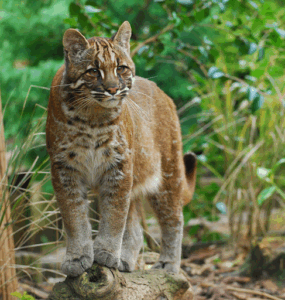
The Asian golden cat, Catopuma temminickii, is a mesopredator species found in forests, shrublands, and rocky regions of the Asian continent. These cats are known for their range of coloration, from darker fur, to golden fur, and even with ocelot-like rosettes. They happen to be one of the less studied cat species in Asia, so not much of their ecology is well-known. Asian golden cats are adept climbers, however they tend to spend a lot of their time on the ground hunting rodents, and at times, small deer.
Africa
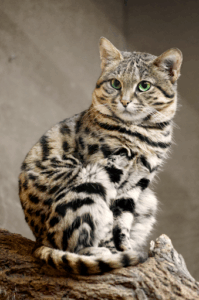
The black-footed cat, Felis nigripes, is a mesopredator native to the southern tip of Africa. Black-footed cats are one of the smallest cat species in the world, weighing only 1-2.5 kilograms (2.2-5.5 pounds). They are found in grassland and semi-desert habitats. Like the Asian golden cat, they spend their time on the ground preying on rodents and birds, while also trying to remain safe from the larger cat species in the area.
North America
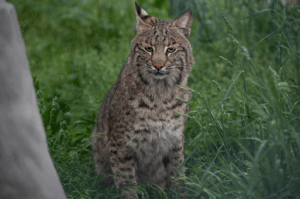
You probably have heard of this one. Bobcats, Lynx rufus, are a wild cat mesopredator species native to North America. They have a widespread range and are found in an incredibly wide variety of habitat types. Bobcats have varied fur coloration depending on their location. Their colorations vary from grey to reddish-brown. They can have more prominent spots as well. Their fur helps them to blend into their surroundings to keep safe and also sneak up on their prey. Turpentine Creek Wildlife Refuge is home to quite a number of bobcats, each with a unique look and coat.
South America
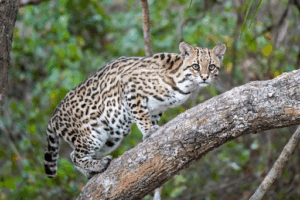
The ocelot, Leopardus pardalis, is native to South America, however, their range extends into part of North America. These cats live in mangroves, high altitude forests, and areas with thick vegetation cover. They are known for their striking spots. Ocelots typically hunt smaller prey like rodents, but they have been known to take down larger prey, ranging from armadillos to small deer.
Europe
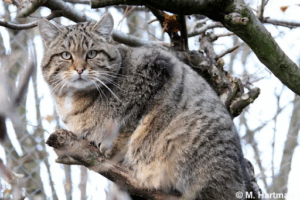
The European wildcat, Felis silvestis, is native to Europe. They are about the size of a larger house cat, making them the smallest native cat species in Europe. Population decline over the last 400 or so years has caused their distribution to become fragmented. Typically, this species lives in forested habitats, but they are sometimes found in riparian and grassland habitats. They tend to stick to small prey.
Australia
There are no cat species native to Australia. However, they do have an abundant problem with invasive feral cat populations in this continent. Feral cats are once domesticated house cats turned wild. They reproduce at a high rate and are detrimental to the ecology of the continent. Feral cats have caused the extinction of many mammalian species in Australia since their introduction into the ecosystem. In 2015, feral cats were officially declared pests by the Australian government.
Antarctica
There are also no cat species native to Antarctica, therefore there are no feline mesopredators. The harsh climate and habitat are not suitable for any terrestrial species.
Visit Turpentine Creek Wildlife Refuge to learn more about the mesopredators that call TCWR home!
Sources
https://www.collinsdictionary.com/us/dictionary/english/mesopredator
https://wildcatconservation.org/wild-cats/asia/asiatic-golden-cat/
https://www.iucnredlist.org/fr/species/4038/245236583
https://upload.wikimedia.org/wikipedia/commons/d/d7/Asian_Golden_cat.jpg

https://www.catsg.org/living-species-blackfootedcat
https://upload.wikimedia.org/wikipedia/commons/d/da/Zoo_Wuppertal_Schwarzfusskatze.jpg

https://nationalzoo.si.edu/animals/bobcat
https://wildcatconservation.org/wild-cats/south-america/ocelot/

https://wildcatconservation.org/wild-cats/wildcat/
https://wildcatconservation.org/wild-cats/eurasia/european-wildcat/
https://www.dcceew.gov.au/environment/invasive-species/feral-animals-australia/feral-cats
*Published by Danika Torgersen on 01/20/2026*