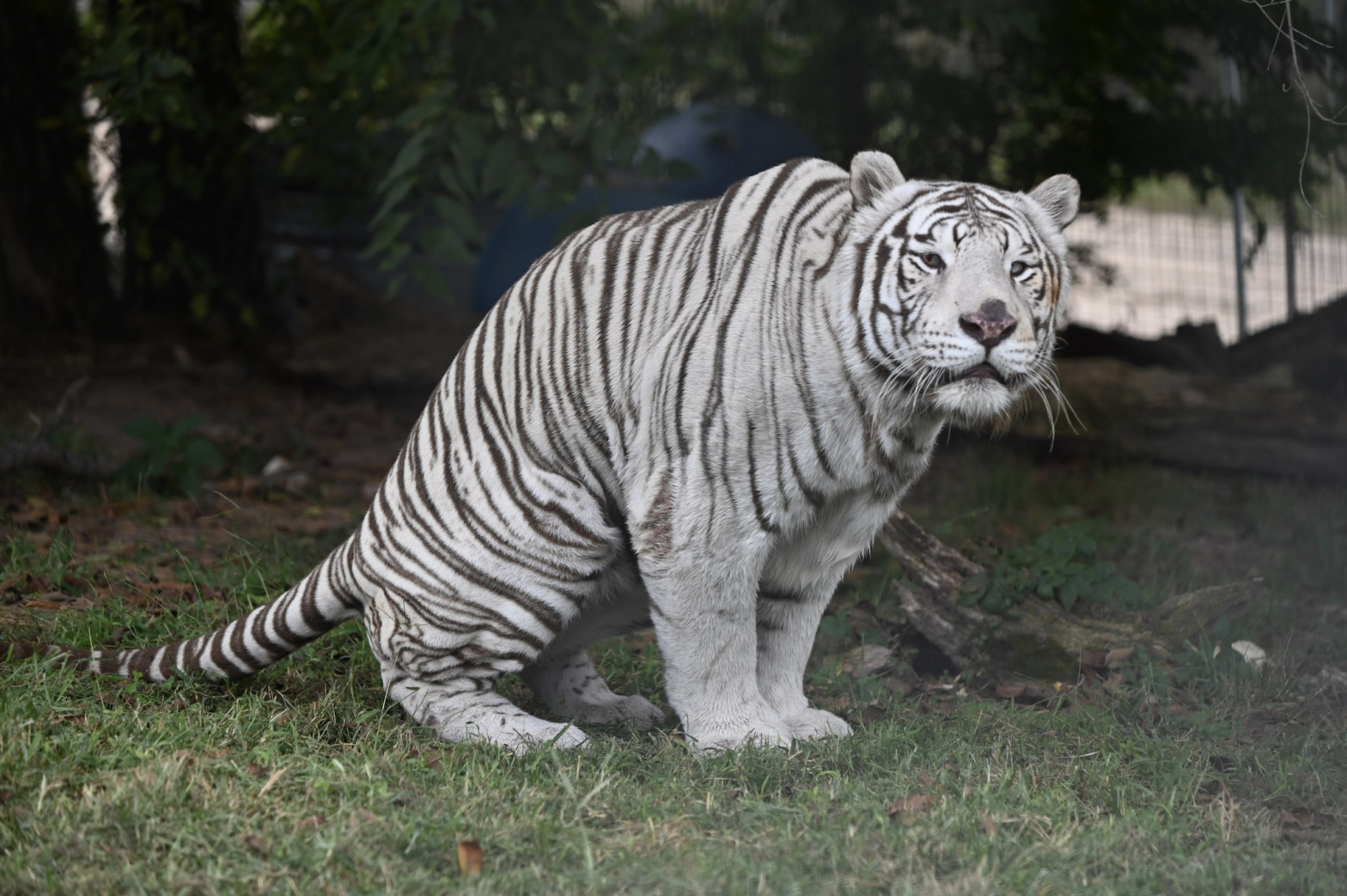
Everybody poops! So, it’s only fair to talk about it. The cats at TCWR are big poopers. But how is their poop made? What do we do with the poop once it has arrived?
Digestive System of Carnivores
Animals can be categorized based on their diets. The simplest of categorizations include carnivores, herbivores, and omnivores. Carnivores are meat eaters, herbivores are plant eaters, and omnivores eat both. However, when you look even further into it, these can be more specifically categorized. Each can be split up based on the amount or percentage of meat or plant the animal is required to consume for survival. Cats are called obligate carnivores. This means they depend wholly on meat for survival. A cat’s digestive system is not suited to digest plant matter. Since cats are obligate carnivores, their digestive tracts are built to digest and process this type of a diet.
Cats have a monogastric digestive system. This means they have a single-chambered stomach, as opposed to a multi-chambered stomach like a cow or a sheep. However, there are many carnivores, herbivores, and omnivores with monogastric stomachs. The difference lies in the length of the digestive tracts. Carnivores, especially obligate carnivores, tend to have a shorter tract than monogastric plant eaters. Plant matter takes longer to digest, thus needing to be in the digestive tract longer.
Stages of Digestion
The basics of digestion through a monogastric system include ingestion, digestion breakdown and defecation. Ingestion is eating, taking in food and swallowing. When the food travels down the esophagus to the stomach, digestion absorption begins. Gastric juices and enzymes break down the food in the stomach and small intestines. The walls of the small intestines absorb the nutrients made available through the breakdown of the food. The excess material is moved to the large intestines where water is absorbed and the waste material is compressed into feces, also known as poop! The feces are stored in the large intestines until making their way to the rectum to be expelled through defecation, which is the act of pooping. Obligate carnivores to not need to break down plant matter, so they have a shorter digestive tract.
Big Cat Poop
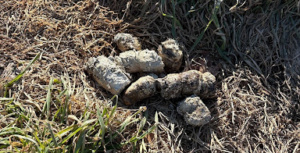
Big cat poop is similar to house cat poop, but big! It is smelly, dark brown or a brownish-gray, and a segmented tube shape. The cats at TCWR often have a certain section of their habitat they prefer to take care of their business.
Scooping Poop
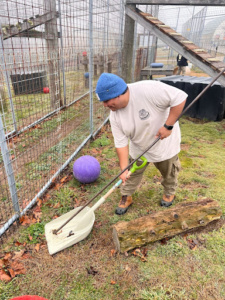
Once a week, after ensuring the cats are safely locked into their night houses, interns enter the habitats of the cats to scoop poop. They walk the entire area scanning for feces. Once spotted, they use a long poop hoe to scoop the poop into a shovel. The poop is then dumped into a container. Once all the poop is gathered, it is then taken to our poop compost pile. This is an efficient and sustainable way to manage the disposal of our cats’ poop. Interns will note the consistency, color, and shape of the poop as well as noticing if there is any blood, mucus, or foreign object. Any anomalies will be reported back to our animal curator and veterinarian so steps can be taken to ensure our animals are the healthiest they can be.
If you visit Turpentine Creek Wildlife Refuge, there’s a good chance you’ll get the opportunity to see the animals participating in any of the stages of digestion or see the interns scooping poop in real time. Come on over to TCWR to learn more about our animals!
Sources
https://www.merriam-webster.com/dictionary/carnivore
https://education.nationalgeographic.org/resource/carnivore/
https://education.nationalgeographic.org/resource/carnivore/
https://zooatlanta.org/carnivore-digestion/
https://nationalzoo.si.edu/animals/news/just-how-big-are-tigers-what-does-tiger-poop-look-and-more-tiger-facts
*Published by Danika Torgersen on 2/21/2026*