
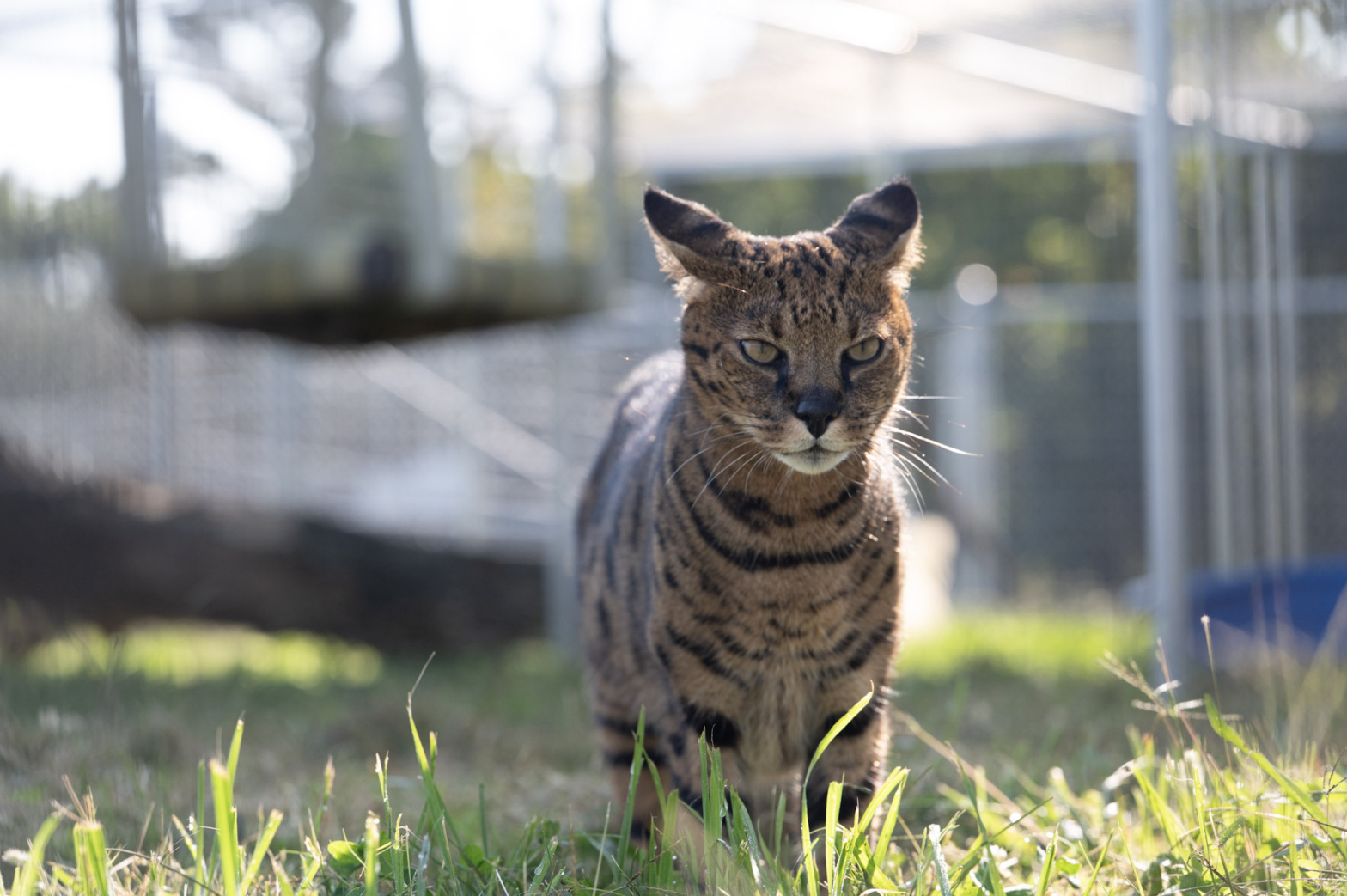
Over one hundred wild cats call Turpentine Creek Wildlife Refuge their home. However, keeping these kinds of animals in a residential home would be dangerous for everyone involved. Domesticated cats are safe to keep in a home, but how did these animals come to be? How did they evolve from their wild ancestors?
The Fertile Crescent
Around 10,000 years ago, nomadic humans began to settle in The Fertile Crescent. This middle eastern land region surrounding the Nile, Euphrates, and Tigris rivers gave way to fertile soil in the midst of an otherwise arid landscape. This region was perfect for agricultural development, and thus, gave way to some of the world’s first civilizations. As humans began growing and storing grain crops, rodents began to infiltrate these civilizations more and more. At the time, humans had no reliable way to combat these pests. However, near-eastern populations of the African Wildcat Felis silvestris lybica appreciated the seemingly never-ending buffet. These wild cats started to come into civilizations staying close to the grain storage areas to hunt the abundant rodents. Simultaneously, the humans benefitted from the cats’ pest control services.
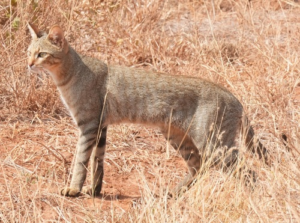
Over time, cats began to benefit from human kindness. Humans frequently fed the cats scraps of food to keep them on their properties and provided them with consistent access to clean water and shelter. These cats would learn that living around humans had great advantages. Over generations, the cats began to trust humans. Today’s domestic house cat Felis catus is most genetically similar to Felis silvestris lybica. Beyond genetic evidence, archaeologists also have a story to tell regarding the domestication of cats.
Archaeological Evidences
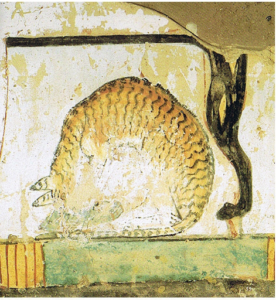
In ancient Egypt, millions of cats were mummified with gold adornments as an offering to the Egyptian goddess Bastet, and there are 3,000-year-old depictions that show cats as companion animals. For quite some time, historians believed that the domestication of cats started in Egypt. That all changed in 2004 when a Neolithic grave was excavated in Cyprus containing a human skeleton lying next to their pet cat. These bones were 9,500 years old! This not only showed that cats had been domesticated in a different region, but also in a completely different time period. Humans travelled all over the world with their cats, so it’s difficult to say exactly when and where domestication started. In fact, the domestication of cats could’ve easily occurred more than once in different places world wide.
Central China
In Central China, the 5,000-year-old remains of a wild leopard cat were unearthed. Researchers found that the cat had grain in its diet, and because cats are obligate carnivores, the presence of grain in their diet would suggest that this ancient cat was being cared for by humans. Although this cat was not necessarily domesticated, the study shows that cats were living around humans, and it provides evidence that this arrangement was mutually beneficial to both parties at the time. In the 15th century, true domesticated cats were brought to China on the Silk Road where they continue to be the most popular urban pet.

Conclusion
The mutualistic relationship between cats and humans seems to have happened naturally, so in part, cats really did domesticate themselves. However, it is important to acknowledge that this process of domestication happened slowly over many generations. Even then, domestic cats were not normally kept indoors until the 1950’s. It is never safe or wise to intentionally feed or keep a wild animal as a pet. Still, the history behind the domestic cat is quite interesting, and we can all be sure that our domesticated feline friends enjoy being around us as much as we enjoy being around them.
Sources
https://www.alleycat.org/resources/the-natural-history-of-the-cat/
https://icatcare.org/articles/the-origins-of-cats
*Published by Mack Polk on 03/28/2026*