
It is estimated that, of the world’s population of 8.1 billion people, over half have a pet in their household. That is more than 4 billion people. The US, EU and China alone account for half a billion cats and dogs. The problem of pet ownership begins when people try to take wild animals into their homes and treat them as they would a domestic animal.
Regulation Difficulties
A 2020 study conducted by World Animal Protection found approximately 17.6 million “exotic pets” in the US. Mammals, birds, fish – so many wild animals are kept in an unnatural, domestic setting. With such a large demand, it’s no wonder that illegal wildlife trafficking makes up the fourth largest illegal trade in the US – an estimated $8 to $10 billion industry as of 2023.
Regulating exotic pets is difficult due to all the different levels that need regulation: global, national, and more. CITES (Convention on International Trade in Endangered Species) is a global agreement limiting the international trade of protected species of both plants and animals. With 185 parties, it protects the trade into and out of most countries. But it’s not perfect. It focuses on the trade of protected species, not the welfare of those species. Poachers and smugglers are still able to often pass the illegal exotic pet trade as regular pet trade.
Wildlife Decline
Some exotic pets are born in captivity, but even then problems often arise. Even when there are regulations regarding wild-caught individuals, people often poach ones from the wild. Some animals don’t breed well in captivity, if at all. Animals that were caught in the wild are often marketed and sold as captive-born, and it can be very difficult to tell the difference between the two. DNA-testing can distinguish captive-born vs. wild-born animals, but it is expensive and takes time.
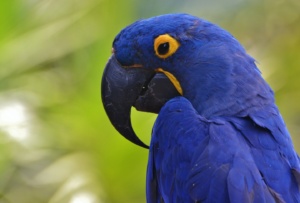
One such animal whose wild population has been decimated, in part due to the pet trade, is the Hyacinth Macaw. A bird native to Brazil, it is a popular pet in Europe. But this macaw is difficult to breed in captivity, so people often poach eggs from the wild and smuggle them out of Brazil and into Europe, where they will then pass them off as having been born in captivity. The removal of so many individuals is detrimental to wild populations.
At one point, there were as many as 3 million Hyacinth Macaws in the wild. In the 1980s, as many as 10,000 were taken from the wild for the exotic pet trade, after which their numbers plummeted to only 1,000. Now there are anywhere from 2,000 to 6,500 left in the wild – a definite improvement, but they are still very much endangered. This egg smuggling is so difficult to catch because inspections are so time-consuming, difficult and expensive.
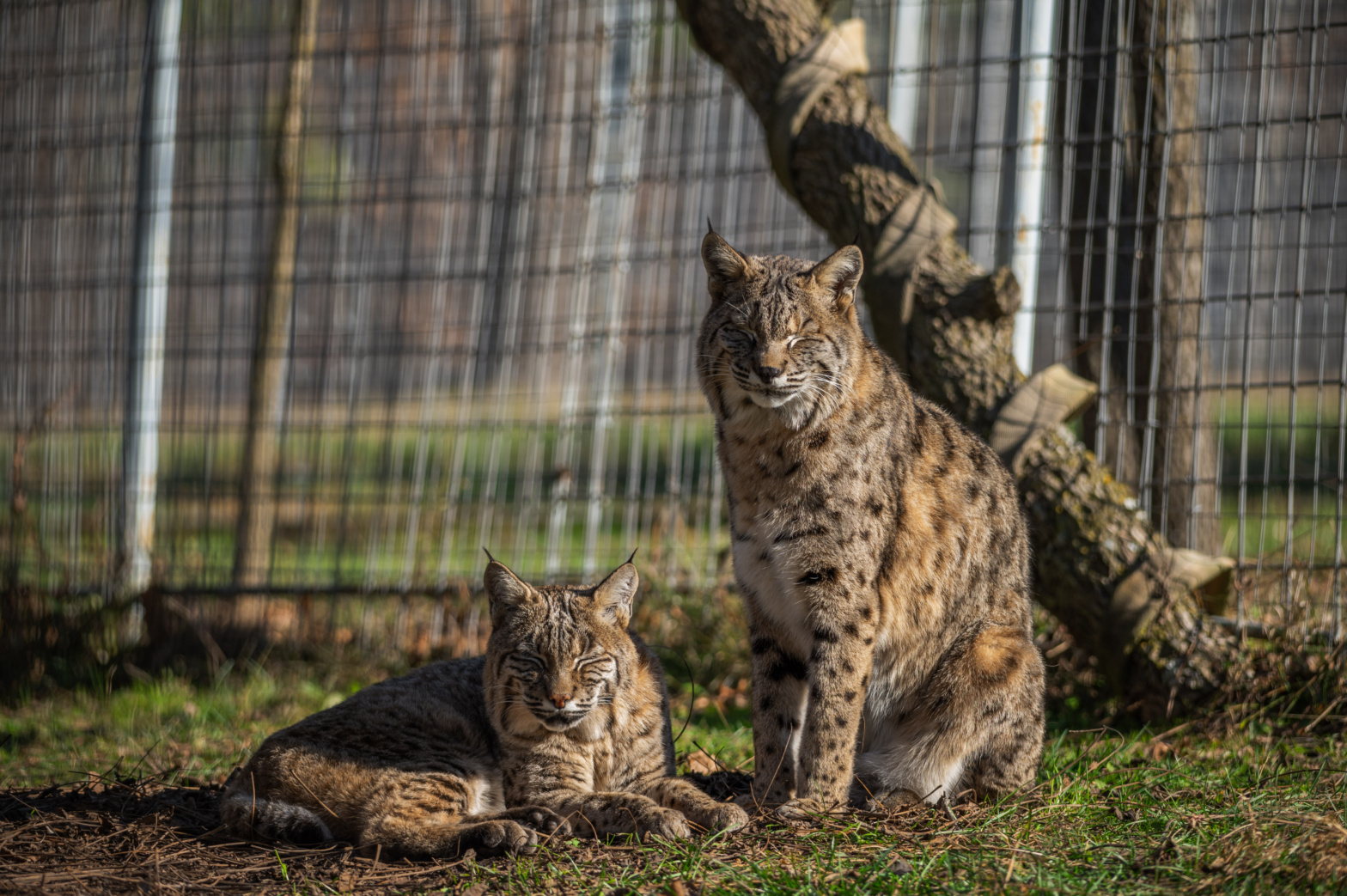
Here at Turpentine Creek, we have rescued several cats who had previously been kept as pets. Two in particular, a pair of bobcat brothers named Tony and Prince, had been removed from the wild as cubs and kept in a basement. This is only one example of people taking wild animals from their natural homes and placing them in an unnatural, domestic setting.
Sources
Figure 1: https://www.fws.gov/media/cites-logo-0
Figure 2: https://www.oneearth.org/species-of-the-week-hyacinth-macaw/
https://www.census.gov/popclock/
https://healthforanimals.org/reports/pet-care-report/global-trends-in-the-pet-population/
https://safeworldwide.org/exotic-animal-trade-tragedy/
https://www.unlv.edu/sites/default/files/media/document/2024-12/r10-Animal-Trade.pdf
https://www.animallaw.info/article/detailed-discussion-exotic-pet-trade
https://www.ifaw.org/journal/what-cites
https://www.animallaw.info/article/detailed-discussion-exotic-pet-trade
https://www.nationalgeographic.com/animals/article/hyacinth-macaw-egg-laundering-for-pet-trade
https://www.fws.gov/story/2018-08/south-american-macaw-protected-under-endangered-species-act
https://www.natureandculture.org/directory/hyacinth-macaw/
*Published by Eryn Meeker on 01/29/2026*